WORLD MUSIC: A SONIC JOURNEY ACROSS CULTURES
Embark on an extraordinary musical journey across continents, discovering the richness and diversity of traditional musical expressions from around the world.
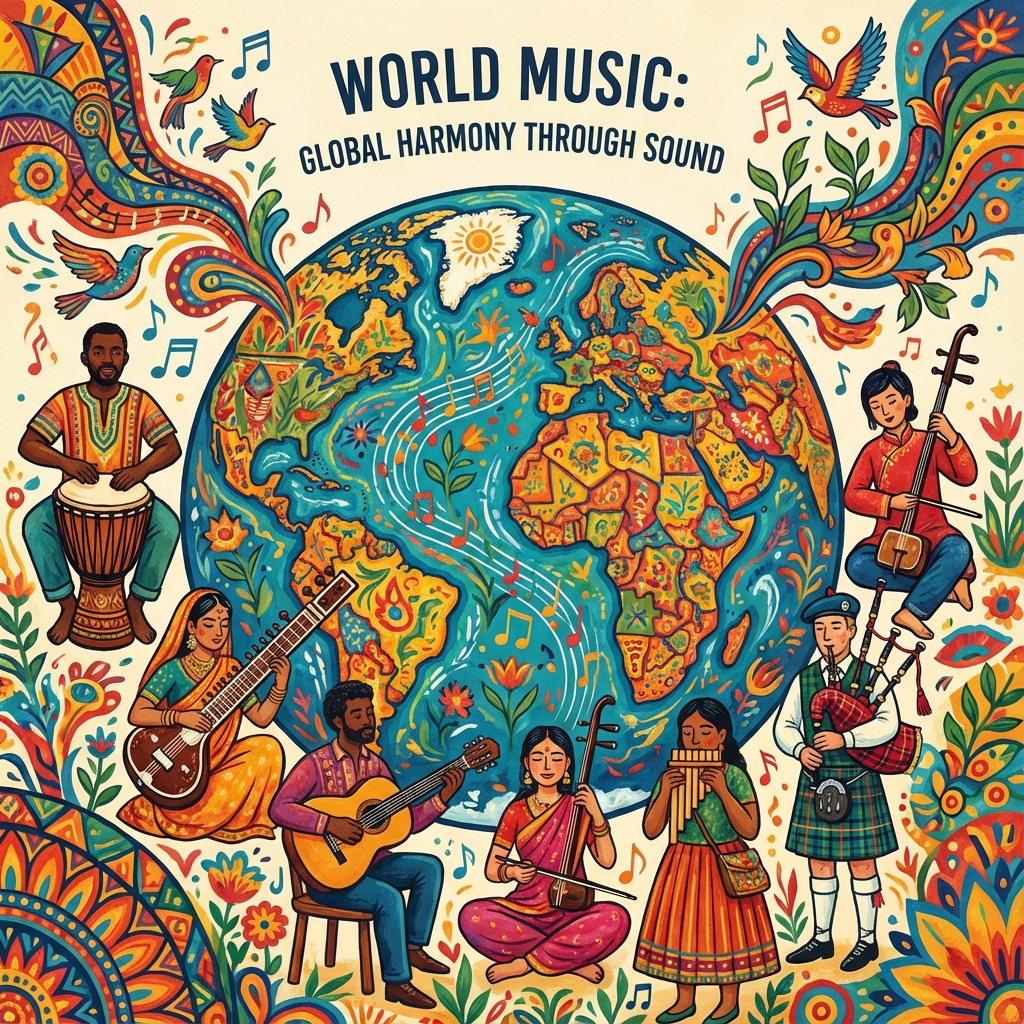
The Universality of Musical Language
World music reveals humanity's extraordinary creative diversity. Each culture has developed its own instruments, rhythms, scales, and musical traditions, creating a sonic heritage of invaluable richness. From Africa to Asia, from Latin America to the Pacific islands, each territory tells its story through its melodies.
This traditional music, passed down from generation to generation, constitutes the sonic identity of peoples and continues to influence contemporary creations, building bridges between cultures and eras.
Continental Musical Panorama:
🌍 Africa - Cradle of Rhythms
Complex percussion, polyrhythms, call-and-response singing, traditional instruments.
Styles: Mandinka music, afrobeat, highlife, soukous, mbaqanga
🏔️ Asia - Millennial Sophistication
Complex modal systems, refined instruments, ancient musical philosophy.
Styles: Indian classical music, Indonesian gamelan, traditional Chinese music
🌎 Latin America - Fusion and Passion
Blending of indigenous, African, and European traditions.
Styles: Tango, samba, salsa, mariachi, bossa nova, cumbia
🏰 Europe - Secular Traditions
Traditional folk, Celtic music, Balkan, Mediterranean.
Styles: Fado, flamenco, Celtic music, Scandinavian folk, klezmer
Iconic Instruments of the World:
🥁 Percussion
- • Djembe (Africa)
- • Tabla (India)
- • Taiko (Japan)
- • Conga (Cuba)
- • Bodhrán (Ireland)
🎵 Melodic
- • Sitar (India)
- • Kora (Africa)
- • Erhu (China)
- • Oud (Middle East)
- • Balalaika (Russia)
💨 Wind
- • Didgeridoo (Australia)
- • Shakuhachi (Japan)
- • Quena (Andes)
- • Zurna (Turkey)
- • Tin Whistle (Ireland)
Musical Characteristics:
- Particular scales: Pentatonic modes, microtones, chromatic scales
- Complex rhythms: Polyrhythms, non-Western time cycles
- Improvisation: Spontaneous creation within a traditional framework
- Social function: Ceremonial, work, and celebration music
- Oral transmission: Learning through imitation and repetition
- Symbolism: Deep spiritual and cultural meanings
Contemporary Influences:
World music profoundly influences contemporary creation. From collaborations between traditional musicians and modern artists emerge innovative fusions that enrich the current musical landscape. These cultural exchanges create new genres and open new artistic horizons.
Exploring World Music
- • Active listening: Focus on particular timbres and rhythms
- • Cultural context: Learn the associated history and traditions
- • Festivals: Attend world music events
- • Learning: Try learning a traditional instrument
- • Discography: Explore specialized collections
- • Musical journey: Discover new sonic cultures
World music reminds us that cultural diversity is an invaluable treasure. Each musical tradition carries within it the wisdom, history, and soul of a people. By exploring these sonic treasures, we broaden our horizons, develop our artistic sensitivity, and strengthen our understanding of humanity in all its splendid diversity.