Choral Singing: The Art of Collective Harmony
Discover the beauty and power of choral singing, where voices blend to create perfect harmony, from great classical works to contemporary arrangements.
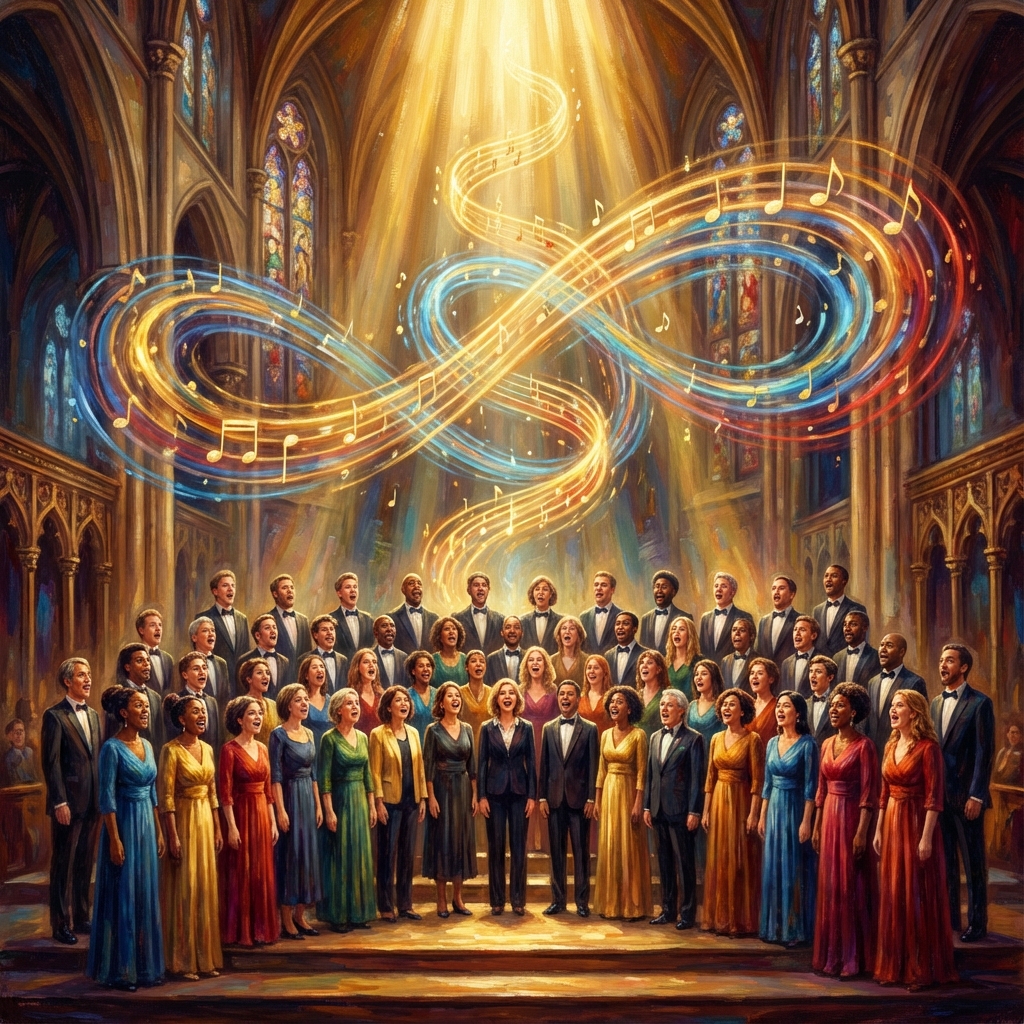
The Magic of United Voices
Choral singing represents one of the most moving and enriching forms of musical expression. When voices blend in harmony, they create a unique sonic experience that transcends the individual to reach the universal. This ancient practice continues to move and unite communities around the world.
From medieval plainchant to contemporary compositions, the choral repertoire offers an extraordinary diversity of emotions and styles. Each era has brought its own colors to this art, creating a musical heritage of inestimable richness.
Choral Genres and Styles:
- Sacred Music: Masses, motets, canticles, Gregorian chant
- Secular Music: Madrigals, folk songs, contemporary works
- Oratorio and Cantata: Large narrative frescoes for choir and orchestra
- A Cappella Singing: The art of singing without instrumental accompaniment
- Gospel and Spirituals: The expression of faith through community singing
- World Music: Choral traditions from different cultures
Essential Composers:
Baroque Era
- • J.S. Bach - Mass in B minor, St. Matthew Passion
- • G.F. Händel - Messiah, Water Music
- • A. Vivaldi - Gloria in D
Classical Era
- • W.A. Mozart - Requiem, Coronation Mass
- • L. van Beethoven - Missa Solemnis, 9th Symphony
- • F.J. Haydn - The Creation, The Seasons
Vocal Technique and Conducting
Choral singing requires a specific vocal technique that favors homogeneity and mutual listening. Each choir member must develop their individual voice while learning to blend harmoniously into the ensemble. Choral conducting, in turn, is a delicate art of sculpting collective sound and revealing all the nuances of the interpreted work.
Getting Started Tips
- • Join a local choir: Group learning is essential
- • Work on vocal technique: Breathing, placement, intonation
- • Develop listening skills: Learn to hear other voices
- • Study music theory: Essential foundation for reading scores
- • Explore different repertoires: Broaden your musical horizons
Choral singing is much more than a musical practice: it is a profound human experience that develops listening, discipline, and team spirit. It offers everyone the opportunity to participate in creating collective beauty that surpasses the sum of its parts.
🎵 Audio Examples
Gregorian Chant
Example of traditional Gregorian chant
Bach - Kyrie (Mass in B minor)
Excerpt from Bach's Mass in B minor
Modern Harmony
Contemporary choral arrangement
🎼 Separate Voices
Click on a voice to listen to it separately
🎬 Educational Videos
Breathing Techniques
Video: Breathing exercises
Coming soon
Fundamental exercises for choir members
Conducting Masterclass
Video: Conducting techniques
Coming soon
Choral conducting techniques