UNIVERSE ECOLOGY, AUTONOMY & PERMACULTURE
Explore sustainable practices to live in harmony with nature: permaculture, energy and food autonomy, life in ecovillages and eco-communities.
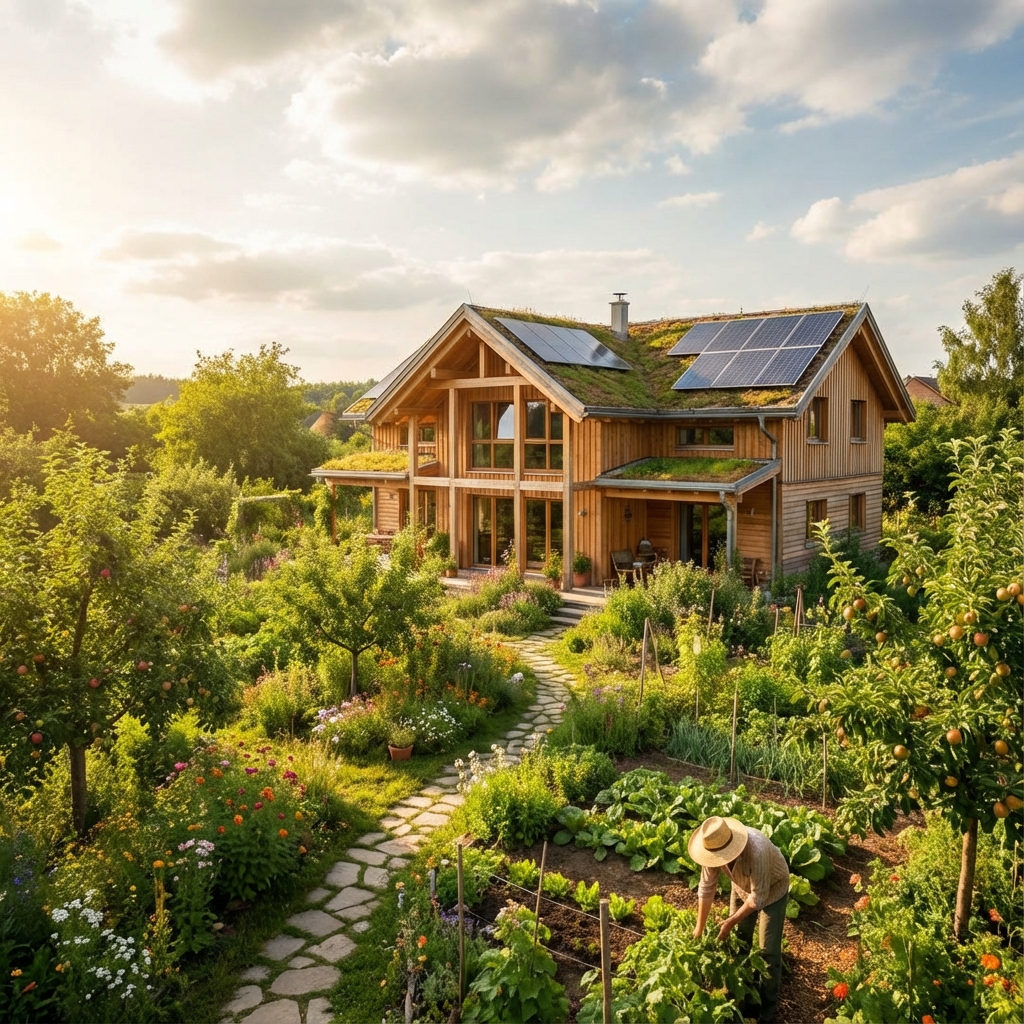
Towards a Sustainable and Autonomous Lifestyle
Facing environmental challenges and the need to build a more resilient future, more and more people are seeking to develop sustainable, autonomous, and environmentally friendly lifestyles. This universe explores different approaches to living in harmony with nature, reducing one's ecological footprint, and building resilient communities.
Whether you want to create your own permaculture garden, become energy autonomous, learn food preservation techniques, or discover life in ecovillages and eco-communities, you will find here resources, practical guides, and testimonials to support you in your journey.
Permaculture: An Ecological Design System
Permaculture is much more than a gardening method: it is an ecological design system that draws inspiration from nature to create sustainable and resilient systems. Founded on three fundamental ethics — care for the Earth, care for people, and fair share — permaculture offers principles and techniques applicable to all aspects of life.
Permaculture Principles
Permaculture is based on twelve fundamental principles developed by David Holmgren and Bill Mollison, which guide the design of sustainable systems:
- Observe and interact: Take time to observe nature before acting.
- Collect and store energy: Capture and conserve available resources.
- Obtain a yield: Ensure a useful harvest.
- Apply self-regulation: Create systems that regulate themselves.
- Use and value renewable resources: Maximize the use of natural resources.
- Produce no waste: Every waste becomes a resource.
- Design from patterns to details: Start with the big picture.
- Integrate rather than separate: Create beneficial relationships between elements.
- Use small and slow solutions: Favor small-scale systems.
- Use and value diversity: Diversity brings resilience and stability.
- Use edges and value the marginal: Interfaces are often the most productive.
- Creatively use and respond to change: Adapt and respond to change.
Permaculture Techniques
Permaculture integrates many practical techniques: creating raised beds, using companion plants, water management (swales, ponds, rainwater harvesting), creating microclimates, agroforestry, and many other methods to create productive and resilient ecosystems.
Autonomy: Towards Energy and Food Independence
Autonomy consists of developing the capacity to meet one's own needs, whether in energy, food, water, or other essential resources. This approach allows reducing dependence on centralized systems and increasing resilience in the face of crises.
Energy Autonomy
Energy autonomy involves producing renewable electricity (solar panels, wind turbines, micro-hydroelectricity), optimizing consumption, energy storage, and sometimes producing biogas or firewood. Each situation is unique and requires an analysis of needs and available resources.
Food Autonomy
Growing your own vegetables, fruits, and aromatic herbs is the first step towards food autonomy. This also includes food preservation (canning, drying, fermentation, lacto-fermentation), raising small animals (chickens, rabbits, goats), seed production, and food processing. The goal is to create a resilient and nutritious food system.
Water Autonomy
Water management is crucial for autonomy: rainwater harvesting, creating natural filtration systems, optimal water use, and sometimes creating wells or springs. Good water management allows reducing dependence on public networks and ensuring a reliable supply.
Ecovillages and Eco-communities: Living in Sustainable Communities
Ecovillages and eco-communities are intentional communities that seek to create a sustainable, ecological, and socially harmonious lifestyle. These projects often combine permaculture, energy and food autonomy, participatory governance, and sharing of resources and skills.
Characteristics of Ecovillages
- Ecological management: Respect for the environment, use of natural materials, waste management.
- Autonomy: Production of renewable energy, local food production.
- Participatory governance: Collective decision-making, shared resource management.
- Community life: Sharing of spaces, tools, meals, and convivial moments.
- Education and transmission: Sharing of knowledge, training, hosting interns and visitors.
- Resilience: Capacity to face crises and changes.
Types of Ecovillages
There is great diversity among ecovillages and eco-communities: some are rural and agricultural, others are more urban and focused on ecological transition in cities. Some are permanent, others host temporary stays. Some are family-oriented, others are open to all. Each project has its own identity and values.
Our Areas of Exploration
- Permaculture and Design: Principles, techniques, sustainable system design, zones and sectors.
- Ecological Gardening: Pesticide-free cultivation techniques, plant associations, soil management.
- Energy Autonomy: Solar panels, wind turbines, storage systems, consumption optimization.
- Food Autonomy: Production of vegetables and fruits, animal husbandry, preservation, processing.
- Water Management: Rainwater harvesting, filtration systems, gray water management.
- Ecological Construction: Natural materials, insulation, sustainable construction techniques.
- Life in Ecovillages: Testimonials, practical guides, participatory governance, community management.
- Resilience and Transition: Crisis preparation, adaptation to climate change, ecological transition.
Embark on a journey towards a more sustainable, autonomous lifestyle in harmony with nature. Whether you want to transform your garden, reduce your ecological footprint, or join an intentional community, you will find here the resources and inspiration needed for your journey.